

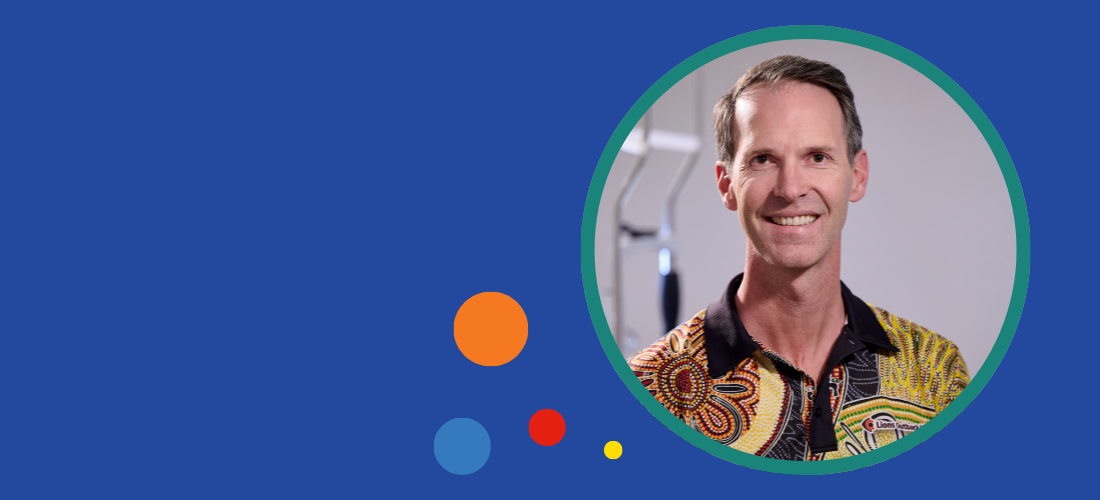
Professor Angus Turner is an internationally recognised clinician and researcher specialising in retinal and macular diseases, and eye care delivery in rural and remote areas.
In regional and rural Western Australia, access to timely eye care is limited by distance, workforce shortages, and long waiting times. For many communities in these areas, primary care providers and optometrists are the main source of eye care.
Professor Turner’s research involves using images of the retina, artificial intelligence (AI), telehealth, mobile screening programs and innovative models of care to help improve access to specialist eye care across regional and rural Western Australia for people who would otherwise have no access to care, or would have had to travel long distances for specialist eye care.
His research has improved access to quality and effective eye care and has enabled earlier detection, diagnosis and treatment in underserved communities.
AI-Enabled neurodegenerative retinal disease detection in regional Western Australia
Professor Angus Turner is an internationally recognised clinician and researcher specialising in retinal and macular diseases, and eye care delivery in rural and remote areas.
In regional and rural Western Australia, access to timely eye care is limited by distance, workforce shortages, and long waiting times. For many communities in these areas, primary care providers and optometrists are the main source of eye care.
Professor Turner’s research involves using images of the retina, artificial intelligence (AI), telehealth, mobile screening programs and innovative models of care to help improve access to specialist eye care across regional and rural Western Australia for people who would otherwise have no access to care, or would have had to travel long distances for specialist eye care.
His research has improved access to quality and effective eye care and has enabled earlier detection, diagnosis and treatment in underserved communities.


What is the research study about?
Retinal diseases are a major cause of irreversible vision loss that can often be prevented through early detection and treatment.
Professor Turner aims to further develop and evaluate an AI-enabled screening system that is built into special cameras that take images of the retina, to detect eye conditions such as age-related macular degeneration (AMD), glaucoma and diabetes-related eye conditions like diabetic retinopathy.
By combining the retinal images, clinical data, and AI support, the system will help health care professionals and providers such as GPs, nurses and Aboriginal health workers, more accurately identify retinal and macular diseases, improving early detection and more timely referrals in rural and regional Australia. The project will also ensure the technology is safe, accurate, and suitable for community-based care.
This research will be delivered through three phases:
Phase I of the project involves developing and fine-tuning the AI models to ensure they are clinically reliable and can accurately detect AMD and diabetes-related eye conditions from photographs.
Phase II will involve placing retinal cameras connected to the AI system into primary eye care practices across regional and rural Western Australia. This phase will evaluate the diagnostic accuracy of the system, and how well the AI tool performs in real-world clinic settings.
Phase III will examine how the technology fits into daily clinic work. This includes surveying clinic staff and patients about how easy the system was to use, how health professionals and staff engaged with it, and how referral decisions and patient care was influenced.
How will this help people with a macular condition in regional and remote areas?
This project aims to improve access to retinal screening for people across regional and rural Western Australia who have limited access to specialist eye care, which can lead to delays in diagnosis and avoidable vision loss.
When patients have their eyes photographed during a routine visit, the AI will analyse the retinal images to produce real-time feedback on whether signs of eye disease are present, and provide management recommendations, for example the need for urgent referral for specialist care, or a non-urgent review with an optometrist.
By bringing advanced technology into local eye care clinics, this groundbreaking project has the potential to revolutionise diagnosis and care for people with a macular or retinal disease in regional and rural areas, not only in Australia, but potentially worldwide.
